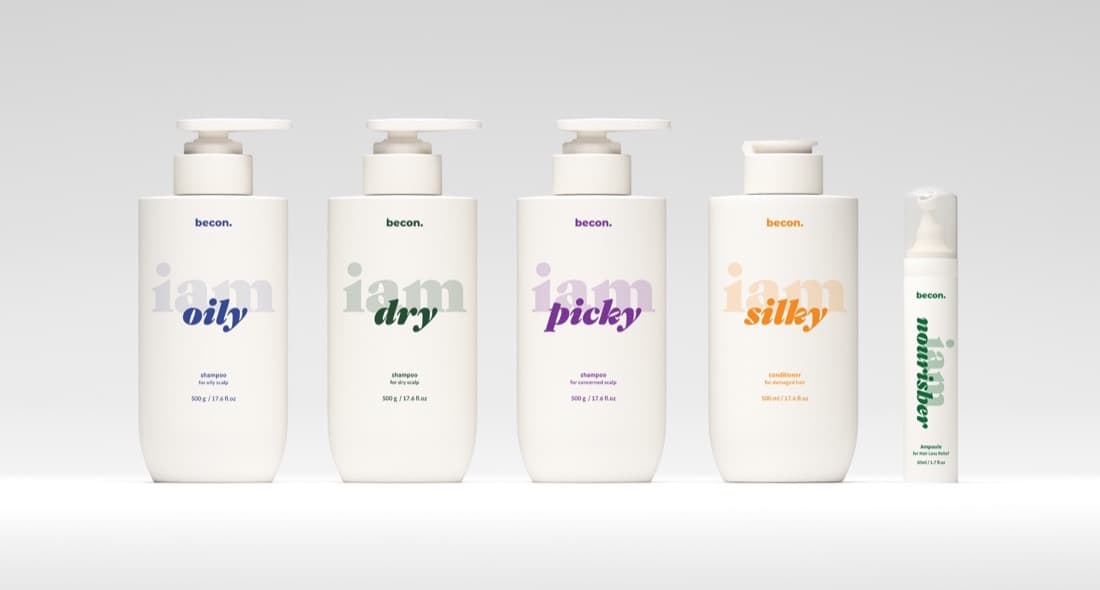
Quick answer: Judge your scalp, not your hair, and judge it on day two after washing. If the roots look greasy or smell by then, you have an oily scalp. If it feels tight, itchy, or sheds fine flakes, it is dry. If it reddens, stings, or reacts to products, treat it as sensitive. The shampoo aisle sorts far more cleanly by scalp than by hair type.
Most shampoo marketing is organised around hair: fine, thick, curly, colour-treated, damaged. That is a reasonable way to sell conditioner, and a poor way to choose a shampoo.
Shampoo spends its working life on your scalp. It is the product that touches that skin most often and for longest. Choosing it by hair type is a bit like choosing face wash by the shape of your nose — you are describing the wrong organ.
The Korean approach inverts this, and the category label gives it away: 두피 케어, scalp care, treated as its own thing rather than a subheading under hair. That framing is most of what makes these products feel different.
Read day two, not day one
Here is the only diagnostic that matters, and it costs nothing.
Wash your hair. Do nothing unusual — no dry shampoo, no extra product. Then look at your scalp about 48 hours later, before you next wash.
Day one tells you nothing; everyone's scalp is fine straight after a wash. Day two is when your scalp shows you what it actually does.
If by day two the roots look flat and greasy, or there is a faint smell — that is an oily scalp. The scalp is among the highest oil-producing regions on the body, with sebaceous gland density in the 400–900 per square centimetre range shared with the face and forehead, so this is common rather than a fault.
If it feels tight, itchy, or you see fine white flakes that lift off easily — that is a dry scalp. Tightness is the giveaway. Dryness announces itself as a sensation before it announces itself visually.
If it reddens easily, stings when you use something new, or produces bumps — treat it as sensitive, and treat that as the priority. A sensitive scalp that is also oily should be managed as sensitive first.
The three, honestly
Once you know which you are, the choice narrows to one bottle.
Oily
The goal is managing oil without stripping. Aggressive degreasing backfires — strip the scalp hard enough and it produces more oil, and you end up washing daily to stay ahead of a problem the washing is sustaining.
What to look for: gentle sebum management rather than harsh sulphates, something with a cooling finish if your scalp runs hot. Becon's I am Oily uses citric acid and piroctone olamine with peppermint and spearmint for that cooling effect.
This is the one I use. My scalp and hair get oily easily, and it is the only one I have tried — I stayed with it because my scalp simply feels better on it. Two things I did not expect: one pump is enough, and it lathers far more than any drugstore shampoo I have used, which suggests it is genuinely concentrated rather than mostly water. It also means the 500g bottle lasts much longer than the size suggests.
One pump is enough, and it lathers far more than any drugstore shampoo I have used — which suggests it is genuinely concentrated rather than mostly water.
Dry
The goal is moisture plus gentle exfoliation, which sounds contradictory and is not. Dry scalps flake, and flakes need lifting — but scrubbing an already-tight scalp makes it worse. A chemical exfoliant does that job without the abrasion.
Becon's I am Dry pairs BHA for that with hyaluronic acid and panthenol for the moisture side.
Sensitive or reactive
The goal is calm first, everything else second. A reactive scalp needs a formula that is not fighting it.
Becon's I am Picky is built around that, with tea tree and piroctone olamine, and panthenol to leave the scalp feeling calm.
Where pH comes in
Korean scalp products advertise a mildly acidic pH more often than Western ones, and there is a real reason behind it.
Skin maintains an acid mantle — a slightly acidic surface film, generally cited in the 4.5 to 5.5 range, that supports normal barrier function. Formulating a shampoo near that range means it is less likely to disrupt something already working. Becon's formulas sit at pH 5.0–6.0.
It is not a dramatic feature. It is the sort of thing you notice by the absence of a problem.
The bits that do not vary
The shampoo is where scalp type matters. The rest of a scalp routine mostly does not.
Conditioner — most conditioners are formulated for the lengths and are best kept off the roots. Scalp-safe conditioners are the exception, and they are worth knowing about if your scalp is dry: it is the one place a conditioner can genuinely help rather than weigh things down.
Ampoule — a leave-in treatment applied to the skin rather than the hair, used daily. If you have not met the format, we wrote a longer explanation of scalp ampoules covering how they differ from oils and tonics.
Both suit every scalp type, which is why routine bundles usually vary the shampoo and hold the other two constant.
On scent, since nobody mentions it
Worth saying because it affects whether you keep using something: these have a real fragrance, and it lasts. Becon calls it "Romantic Moments" — floral over a woody musk. It smells genuinely good and it is still there at the end of the day.
If you are fragrance-sensitive, that is a reason to be cautious. If you are not, it is one of those small things that makes a routine easy to stick to.
When it is not a shampoo problem
Cosmetic products manage how a scalp looks and feels. That covers a lot of everyday complaints.
It does not cover everything. Persistent flaking that does not respond, soreness, spreading redness, or hair loss you can see happening are worth a dermatologist rather than another bottle. A diagnosis is quicker than working through a shelf, and some of those have causes no shampoo addresses.
Frequently Asked Questions
How do I know my scalp type? Wash your hair, wait 48 hours, then look. Greasy or smelling by day two is oily. Tight, itchy, or finely flaking is dry. Reddening or stinging is sensitive. Day one tells you nothing.
Can my scalp be oily and dry at once? Yes, and it is common — an oily scalp with dry, flaking patches usually needs the dry-scalp approach, because the flaking is the thing bothering you. If it is also reactive, treat sensitivity first.
Should I choose shampoo by hair type or scalp type? Scalp type. Shampoo sits on your scalp; conditioner and styling products are where hair type matters.
Does washing more often make oiliness worse? Stripping the scalp hard can prompt more oil production. A gentler shampoo used regularly usually beats a harsh one used constantly.
Do I need a different conditioner for my scalp type? Usually not. Most conditioners are for the lengths and belong off the roots regardless. Scalp-safe conditioners are the exception worth knowing about if you are dry.
How much shampoo should I use? Less than you think with a concentrated formula. One pump is enough for me — if you are using three, either the product is heavily watered down or you are washing hair that is already clean.